How to Choose Your First Cordless Drill (and Not Regret It)
Voltage, brushless motors, drill vs impact driver, and why you're really buying a battery platform. A plain-English guide to your most important tool.
This guide contains Amazon.ca affiliate links. As an Amazon Associate, Threshold earns from qualifying purchases, at no extra cost to you. Details
A cordless drill is the tool that unlocks nearly every other project in a home. Shelves, curtain rods, furniture, TV mounts, cabinet hardware: they all start with one. It's also the tool people most often buy wrong, usually by buying the cheapest one or the most powerful one when what they needed was in between.
You're buying a battery, not a drill
Here's the part the box doesn't tell you. Cordless tool batteries only work within one brand's system, and sometimes only within one voltage line inside that brand. The drill you buy today decides which saw, sander and vacuum you'll buy next year. So the real question isn't "which drill?" It's "which platform do I want to live with?"
For most Canadian homeowners and renters, it comes down to three:
- DeWalt 20V MAX is the safe, capable middle. It has a huge tool lineup and is stocked at practically every hardware store, so replacement batteries are easy to find.
- Milwaukee M12 is compact and light, and it's surprisingly strong for its size. It's ideal if most of your work is inside the house: furniture, fixtures, cabinets, anything overhead.
- Ryobi ONE+ 18V is the budget-friendly way to own a lot of tools. Its range is enormous, from drills to glue guns to garden tools, all on one battery.
Voltage: bigger isn't automatically better
An 18V or 20V drill (in North America they're essentially the same class, just labelled differently) has more power for large holes and long screws. A 12V drill is smaller, lighter and easier to control. If you're mostly assembling furniture, hanging things and doing light repairs, a 12V tool is often the better experience. If you're building decks or drilling into concrete regularly, go 18/20V.
Brushless: the upgrade that's worth paying for
Brushless motors are more efficient. They run cooler, get more work out of every charge and generally outlast brushed motors. On a tool you plan to keep for ten years, it's the one upgrade we'd always recommend.
Drill or impact driver?
They look similar but do different jobs:
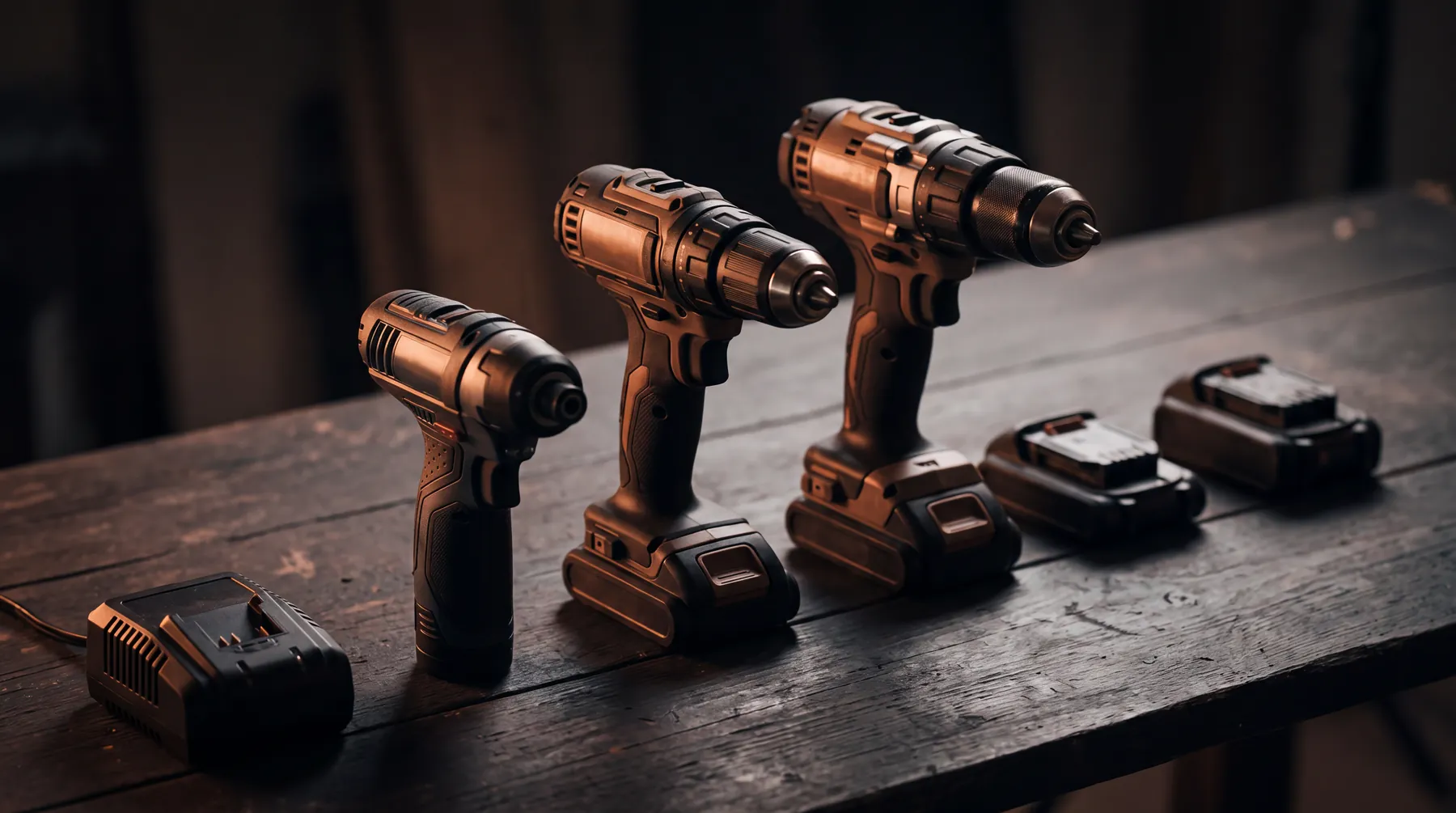
- A drill/driver makes holes and drives screws with steady, controllable torque. It has a clutch so you don't strip small screws.
- An impact driver adds rapid rotational hammer blows. It sinks long screws and lag bolts easily and puts much less strain on your wrist.
If your budget allows, a combo kit with both is the best value in the tool world. The kit's two batteries let you swap one out while the other charges.
What else to buy with it
- A decent bit set: drill bits for wood and metal, plus a set of driver bits.
- A stud finder so heavy things go into wood, not drywall.
- A laser level if you'll be hanging shelves or art.
The bottom line
Pick your platform first. Then buy a brushless kit with two batteries. After that, buy "tool-only" versions of everything else to save money. Get that right and you'll use the same batteries for a decade.
Keep reading.
Smart Locks, Explained: What Works for Owners, Renters and Canadian Winters
Retrofit vs full-replacement locks, keypads, Wi-Fi, batteries in the cold, and how to check your door before you buy.
Read the guide
The Weekend Bathroom Refresh: Five Upgrades, No Contractor
A new shower head, fresh caulk, a bidet, a quieter fan and better light. A step-by-step plan to make a tired bathroom feel new in two days.
Read the guide